Mix & Match: Find your Perfect Focus Subject Combination
Design your Master's Programme According to your Interests
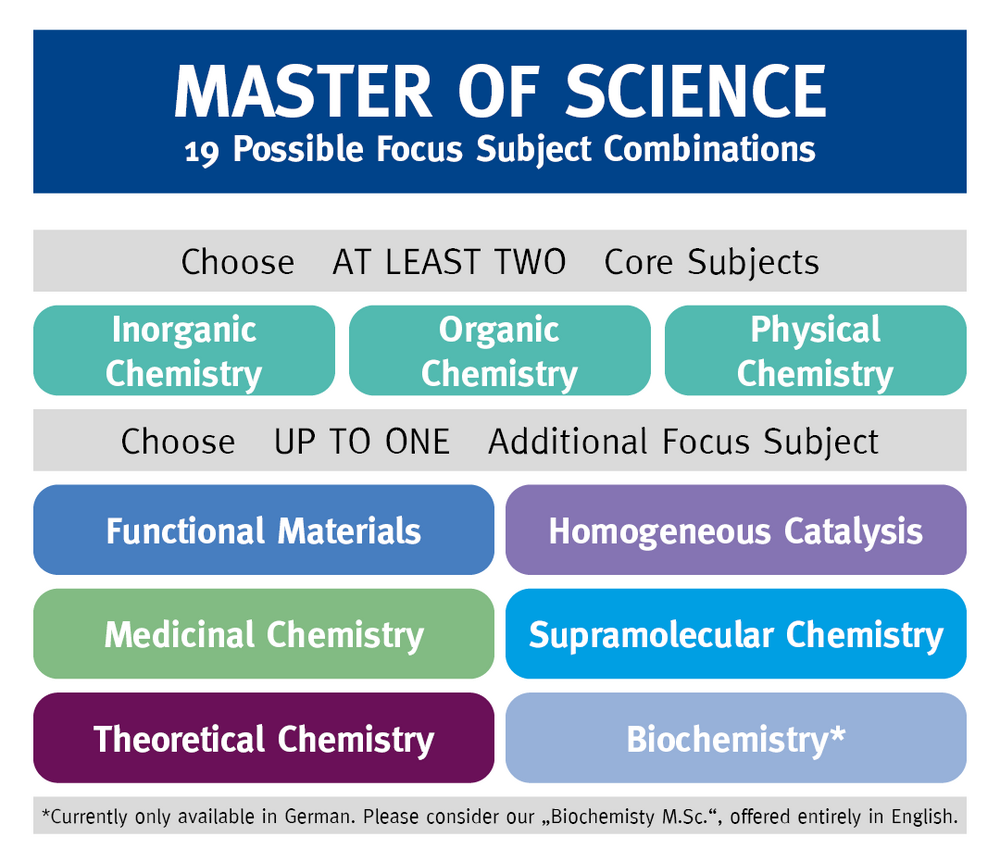
In the Master's degree programme in Chemistry at JMU, you can flexibly adapt your studies to your professional interests and career goals.
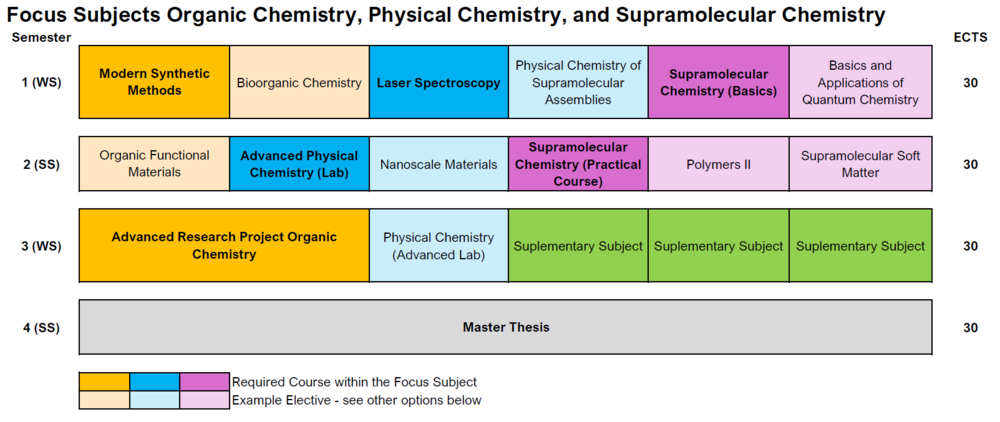
On this page we highlight the nine focus subjects you can choose from, of which you will study three. At least two of these must be from the core areas of inorganic, organic and physical chemistry. As orientation and inspiration for your own study path, we've created sample study plans to show you how a specific combination of focus subjects can look in practice, however, there is still plenty of room for individual design. With 19 different combinations, there's truly something for everyone.
Potential career paths and research areas you could pursue with each focus subject help you imagine how your choice of focus subjects can shape your professional future.
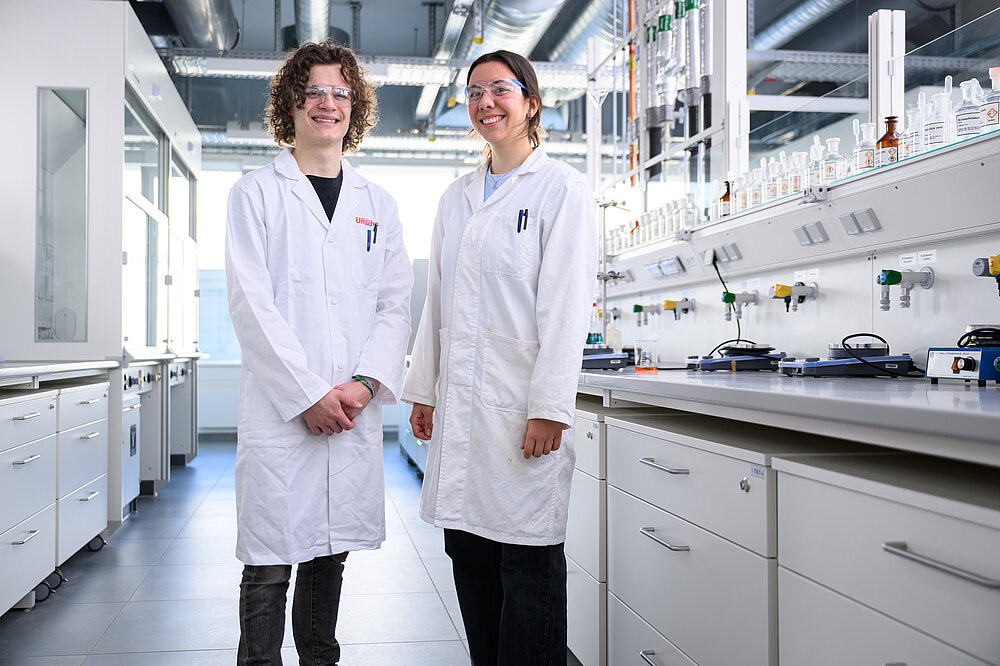
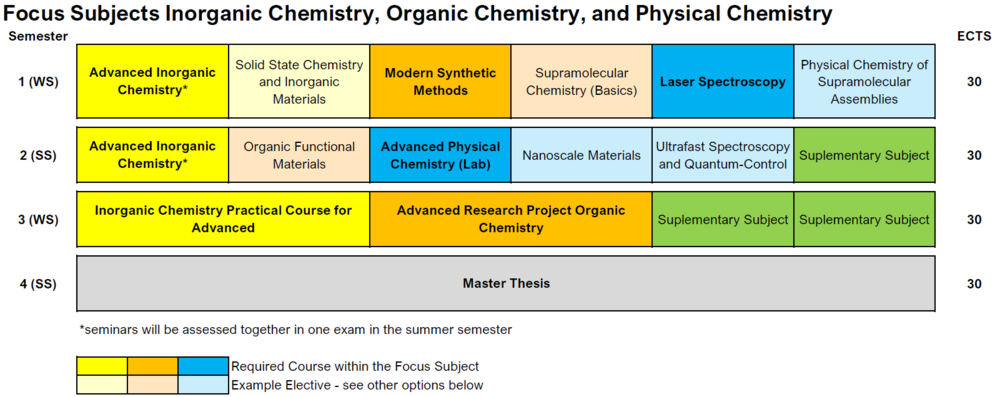
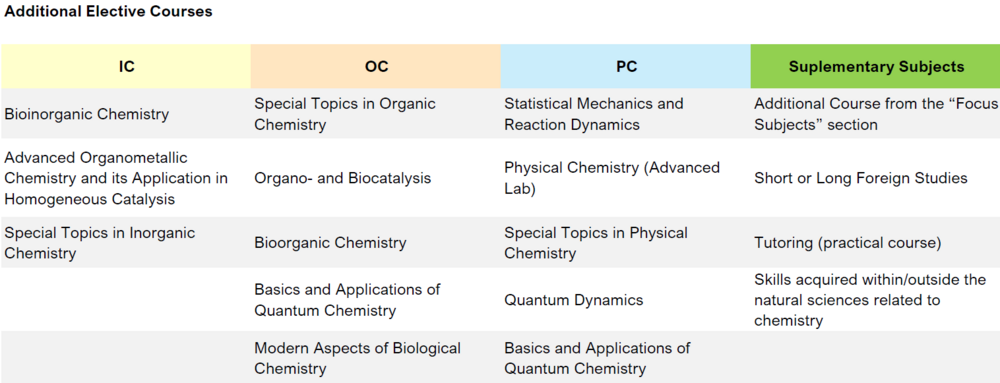
With the combination of inorganic, organic, and physical chemistry, you are opting for a solid and wide-ranging specialisation in the Master's degree programme. You will delve deep into the synthesis, characterisation and reactivity of both organic and inorganic compounds and at the same time understand the physical-chemical principles that control many processes at the molecular level.
This combination provides you with a balanced foundation for many areas of modern chemistry - from catalysis and materials research to analytical methods and theoretical understanding. It is particularly suitable for anyone who does not want to specialise too early in their career or who is aiming for a research-oriented career in academic or industrial chemistry.


-
Research & Development
-
Researching new substances and reactions
-
-
Analytics & Quality Control
-
Precise measurements and process monitoring
-
-
Pharma & Environmental Chemistry
-
Active ingredient development, trace analysis, sustainability
-
-
Material & Process Engineering
-
Structural analysis and process optimisation
-
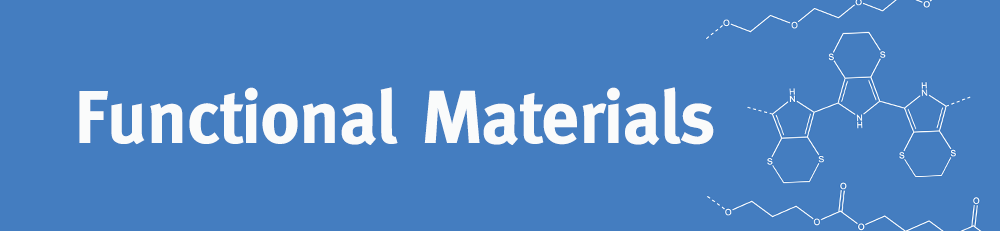
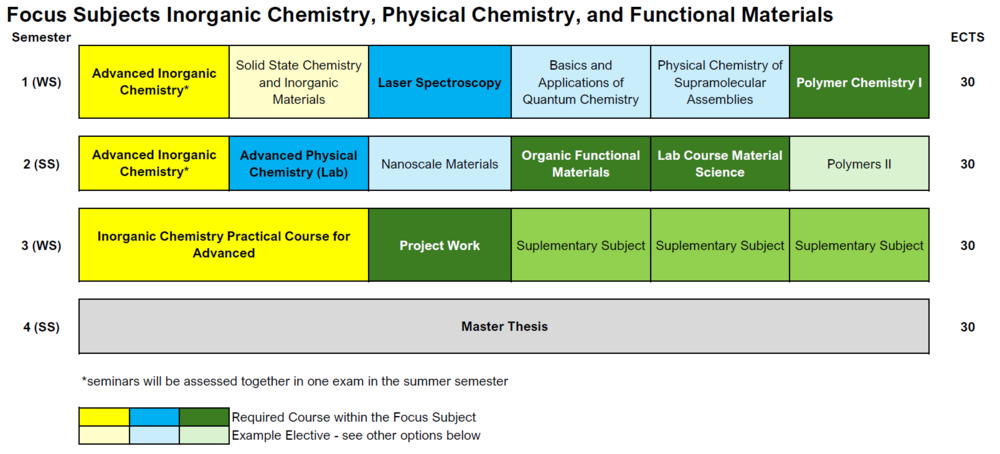
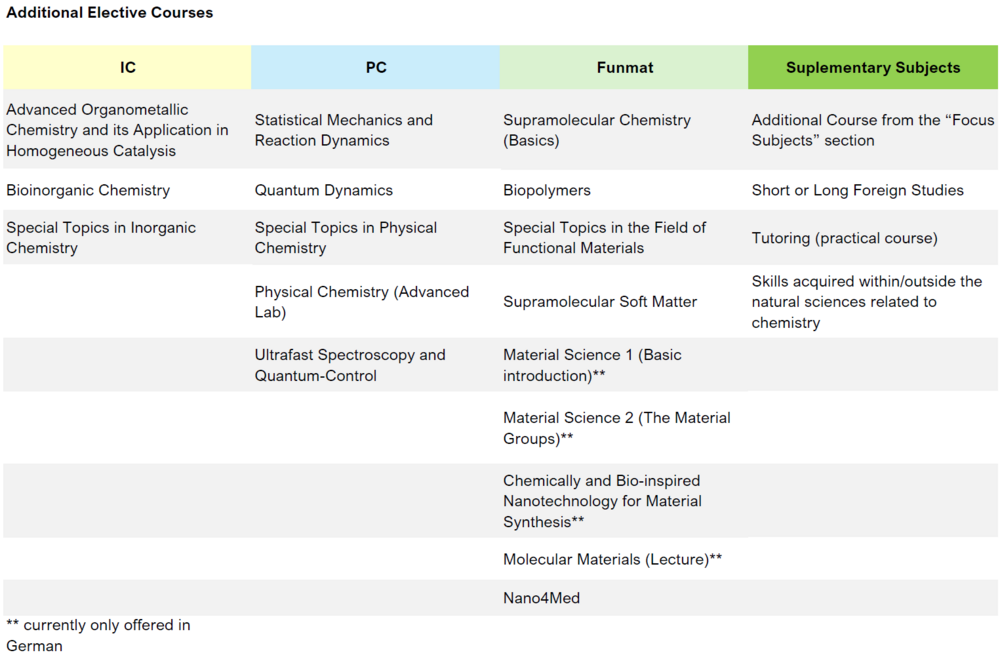
The Functional Materials focus subject creates an ideal foundation for the targeted development and analysis of functional materials and their application.
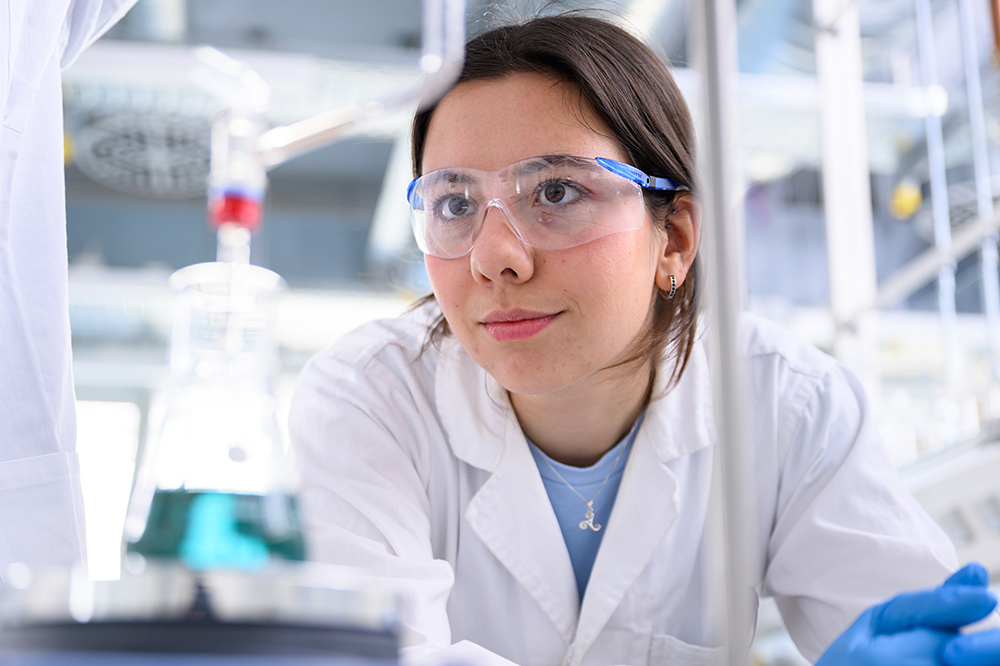
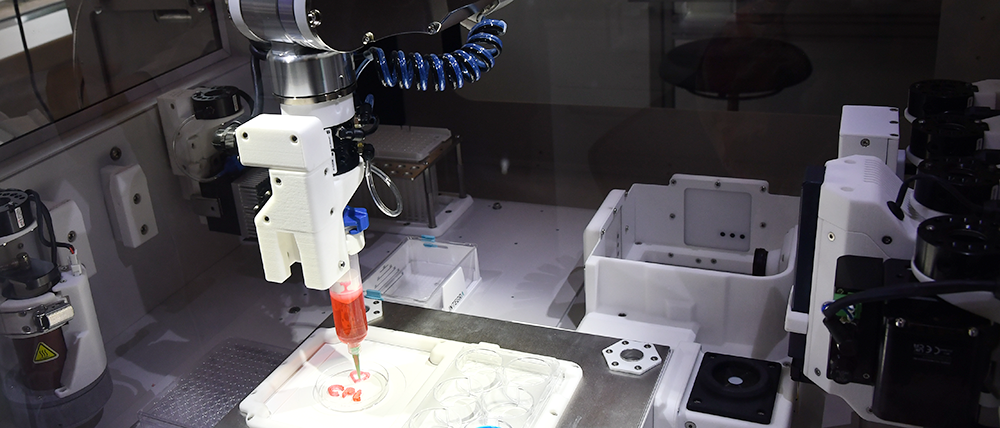
Whether energy conversion, storage materials, polymers, sensor technology or high-tech (bio-)materials - this focus subject opens the door to future fields in which chemical expertise has a real impact. Students learn the basics as well as more specialized knowledge of the synthesis and physical and chemical properties of inorganic, organic, polymeric and (bio-)hybrid materials and their applications in functional components.
Students with an interest in innovation, material design and interdisciplinary applications will find a dynamic, research-oriented profile with excellent prospects in science and industry in this combination.
-
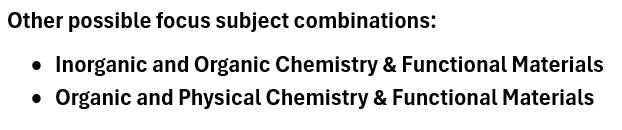
Inorganic and Organic Chemistry & Functional Materials
-
Inorganic and Physical Chemistry & Functional Materials
-
Organic and Physical Chemistry & Functional Materials
-
Polymers
-
Development of sustainable materials for applications in everyday life
-
-
Energy & Sustainability
-
Materials for batteries, fuel cells, solar cells
-
-
Electronics & Optics
-
Development of materials for screens, LEDs, sensors or circuits
-
-
Nanotechnology & Surface Chemistry
-
Working with tiny particles or layers that have special properties in the field of medicine or environmental protection
-
-
Analytical Chemistry & Material Testing
-
Development of new measurement methods to precisely characterise materials
-
-
Nanomedicine
-
Development of advanced drug delivery systems and biopolymers for pharmaceutical applications
-
-
Technology and Consulting
-
Innovation management, start-ups or patent law firms
-
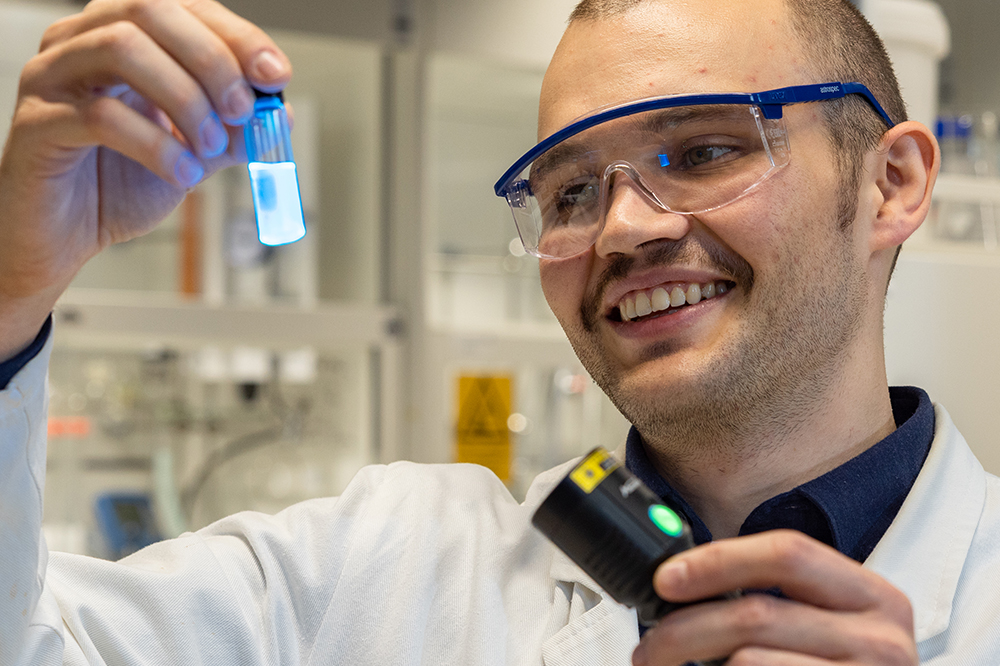
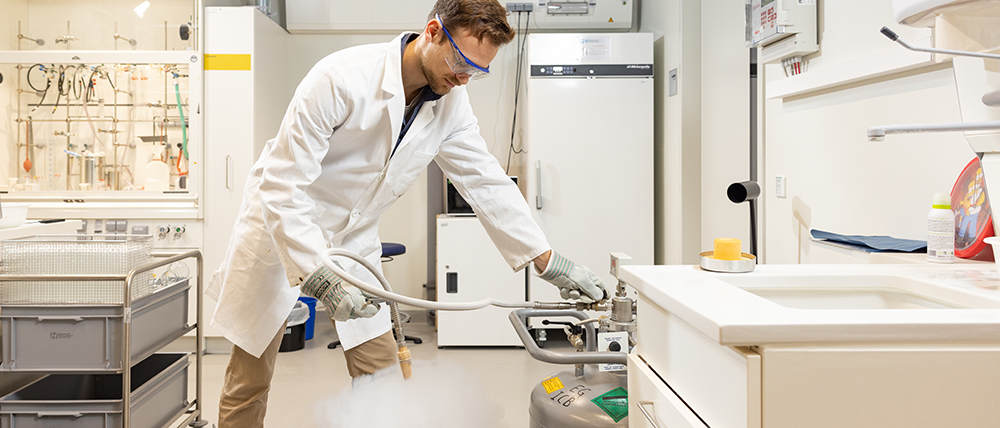
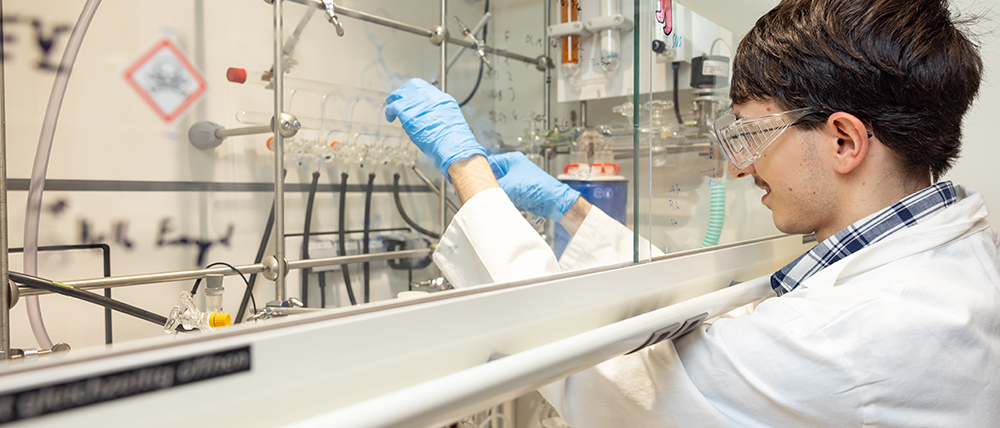
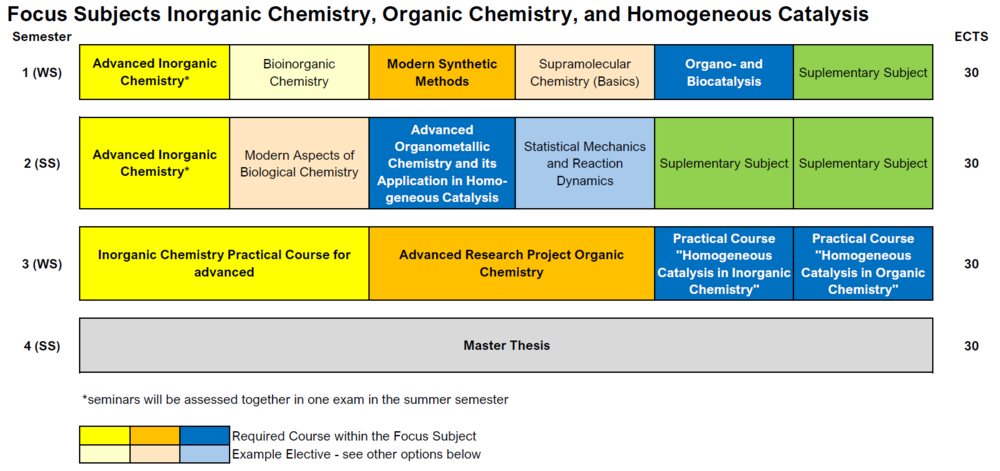
Nearly every aspect of life is interconnected with catalysis, whether it occurs in an industrial reactor, a living plant, or your own body. The focus subject in homogeneous catalysis combines critical fundamental knowledge in catalysis with cutting-edge research expertise. Students receive in-depth training in modern catalytic concepts, ranging from organocatalysis and biocatalysis to main group and transition metal catalysis. This focus subject also offers direct insights into sustainable reaction strategies, mechanisms and applications in research and industry.
This combination opens up a particularly broad spectrum of methodological skills, including modern synthesis, analysis and inert gas techniques, and is ideal for students interested in research-related laboratory work and industrial applications in the fields of fine chemistry, pharmaceuticals and sustainable chemistry.
-
Inorganic and Organic Chemistry & Homogeneous Catalysis
-
Inorganic and Physical Chemistry & Homogeneous Catalysis
-
Organic and Physical Chemistry & Homogeneous Catalysis
-
Sustainable Chemistry and Green Tech
-
Developing environmentally friendly processes and catalysts that make reactions more energy-efficient
-
-
Pharma & Drug Development
-
Researching the synthesis of new organic molecules and producing and testing new drugs and active ingredients
-
-
Research and Development
-
Develop new reactions by investigating reaction mechanisms and analysing them in real time
-
-
Technology Transfer & Patents
-
Translating chemical knowledge into new applications and innovations
-
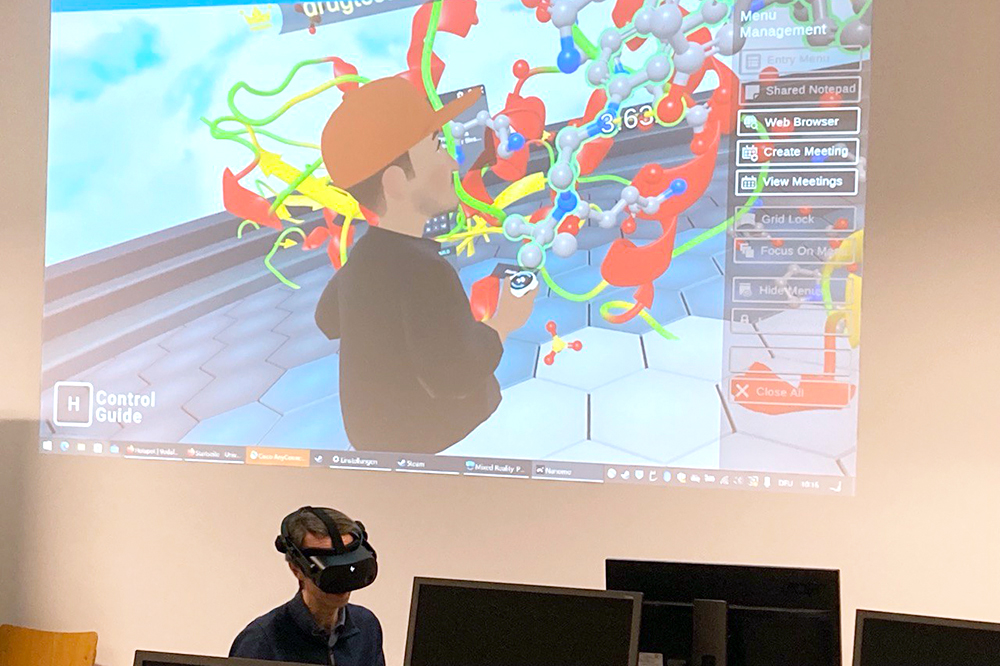
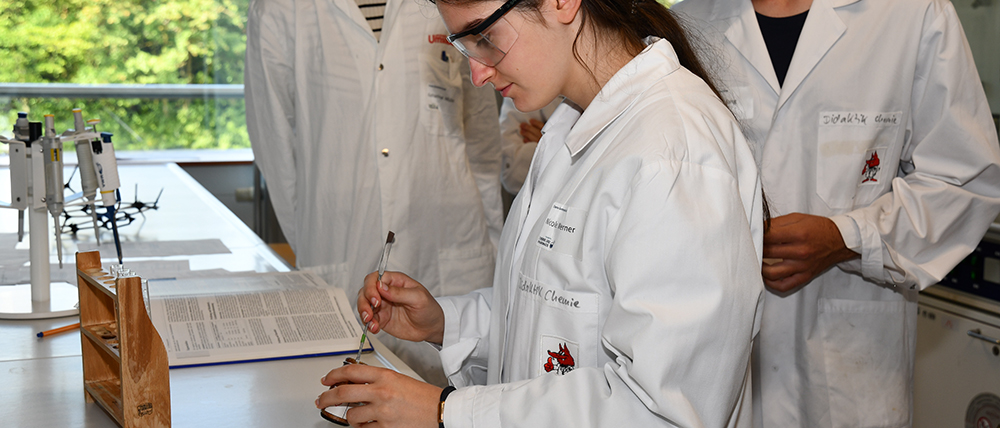
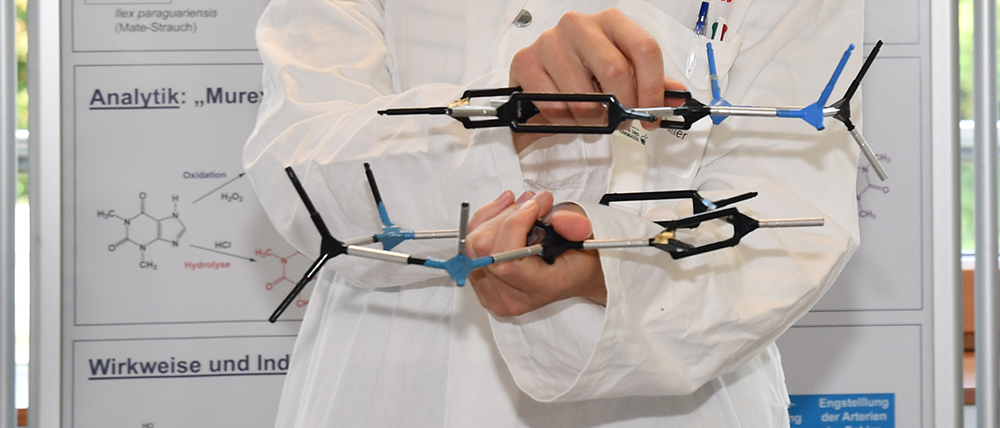
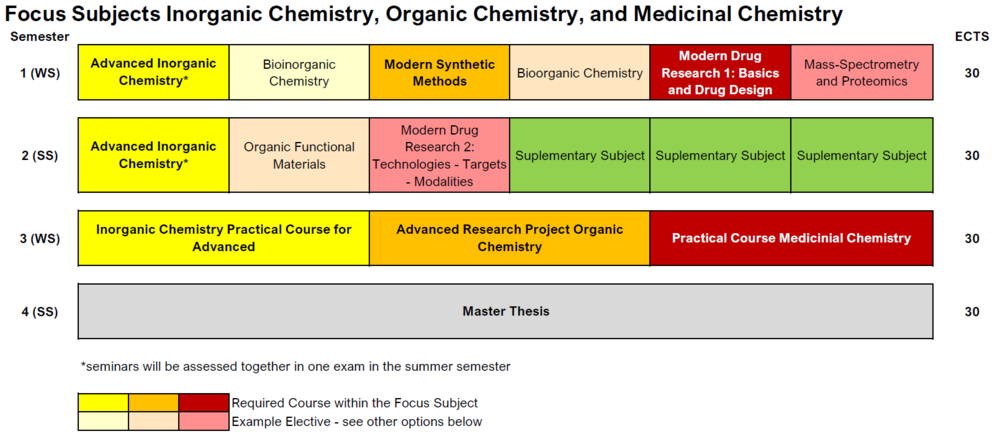
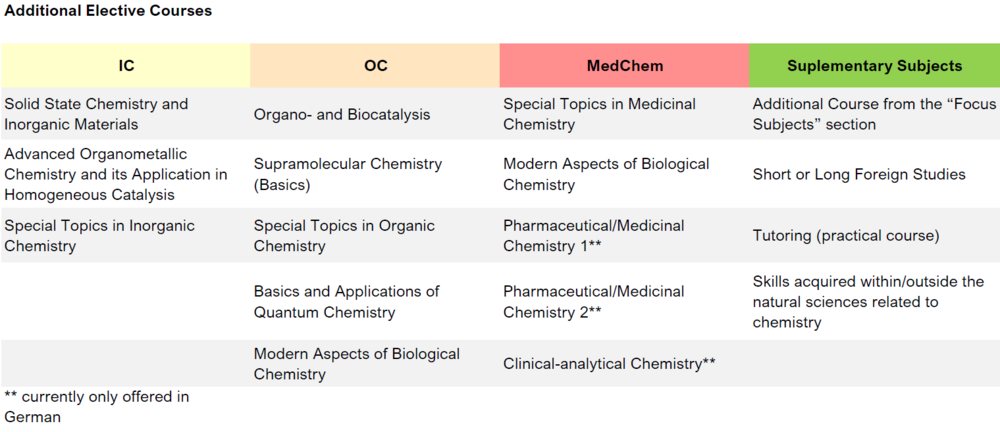
Medicinal Chemistry offers an interdisciplinary profile at the interface of drug research, compound screening technologies, molecular and computational design, organic synthesis, and pharmacological evaluation. Students learn how chemical structures are related to biological function and recieve hands-on training in modern compound screening, modelling, targeted organic synthesis, compound analysis and high-throughput techniques. In practical courses, students actively contribute to the development of new technologies as well as the design and application of innovative biologically active substances and diagnostic tools, such as PET probes.
Reflecting the Institute's broad research portfolio, including DNA-encoded chemistry, new drug modalities, diagnostic agents, photopharmacology or computer-aided drug design, the focus subject opens diverse pathways into life sciences-related chemical research.
-
Inorganic, Organic, and Medicinal Chemistry
-
Inorganic, Physical, and Medicinal Chemistry
-
Organic, Physical, and Medicinal Chemistry
-
Pharmaceutical Research & Drug Discovery
-
Design and development of new biologically active compounds
-
Clinical Chemistry & Diagnostics
-
Development of tests, detection methods and biomarkers
-
Analytics, Quality Control & Sustainability
-
Testing active ingredients, verifying purity, ensuring efficient and environmentally friendly production of pharmaceuticals
These profiles are sought by the pharmaceutical industry, by academic life sciences-oriented chemistry research and by regulatory agencies.
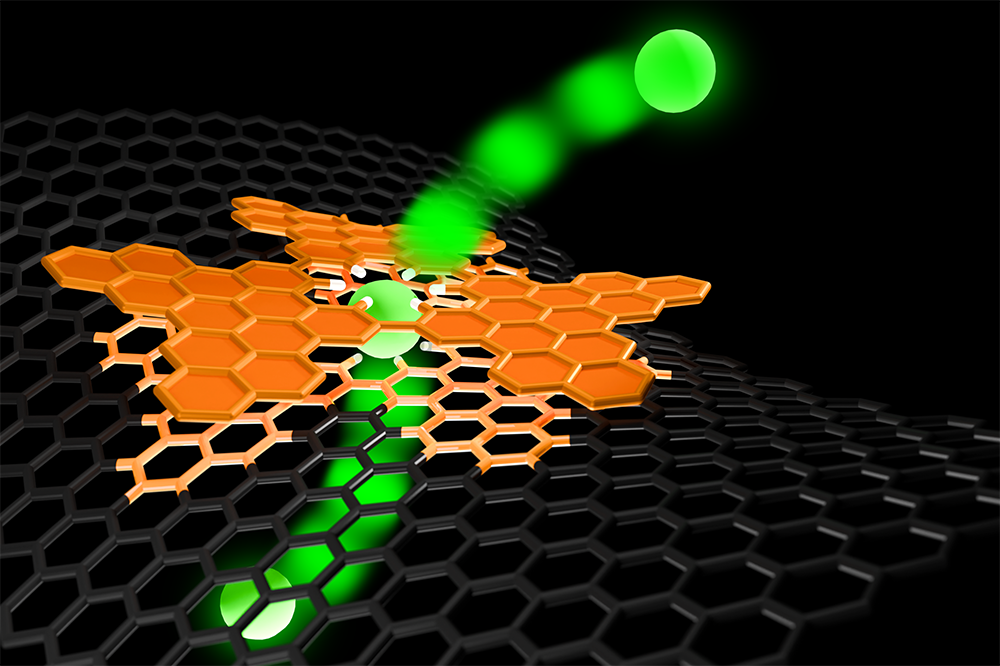
This focus subject is aimed at anyone who wants to discover chemistry beyond the individual molecule. Here students learn how molecules organise themselves into larger functional structures and what new properties arise as a result.
Whether nanomaterials, sensor technology, molecular machines or biomimetic systems - this focus subject opens up insights into some of the most exciting fields of research in modern chemistry. It is ideal for anyone who wants to combine creativity in molecular design with state-of-the-art analytics and help shape the innovative applications of tomorrow.
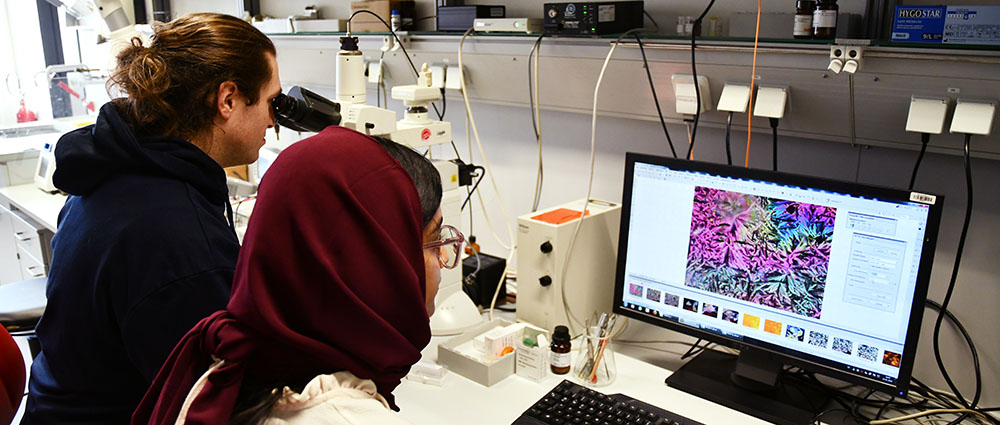
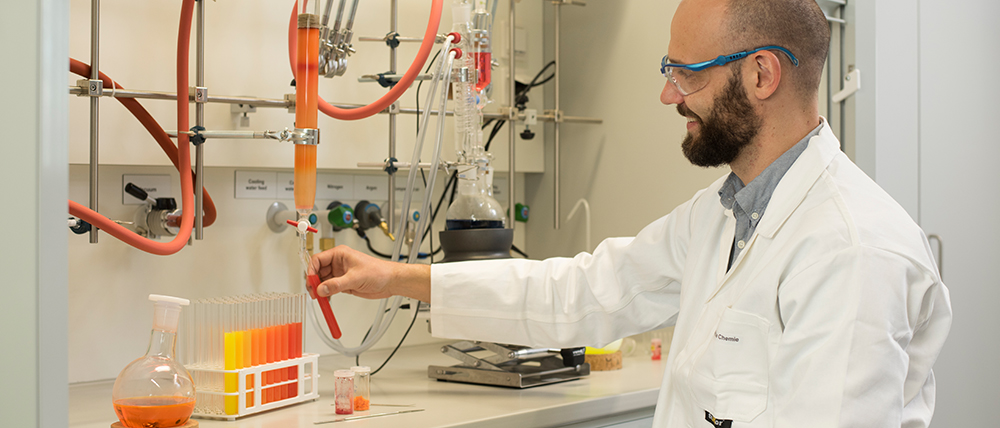
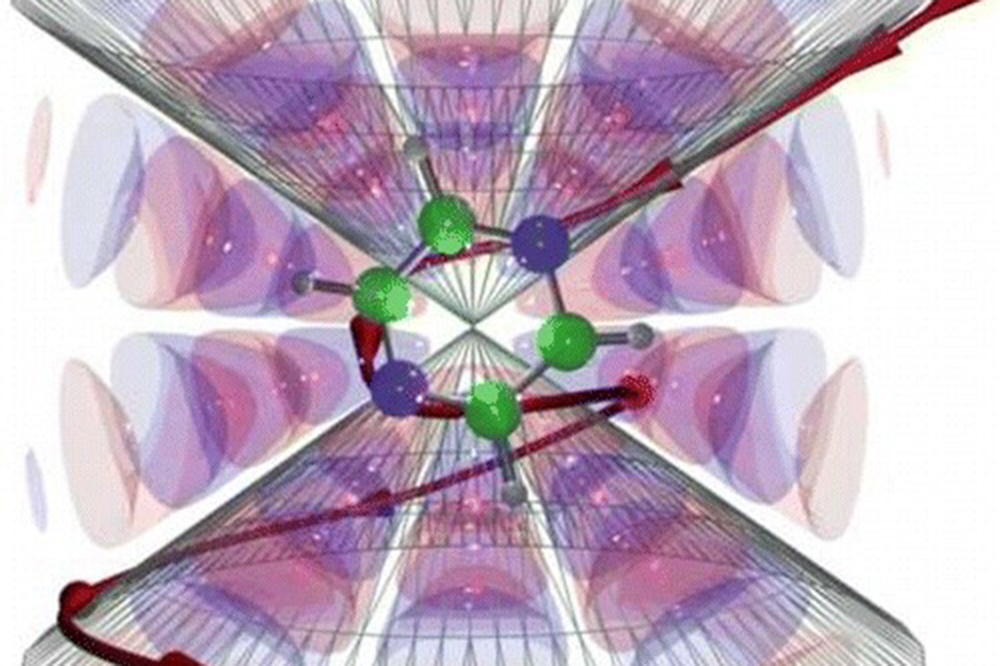
Theoretical chemistry provides an understanding of chemical processes grounded in quantum mechanics and equips students with computational tools to model and design molecules in silico. By combining rigorous theory with programming and modern simulation techniques, it enables interpretation of experiments and method development from ab initio and semi-empirical electronic-structure theory to quantum molecular dynamics and AI-assisted molecular design.
In this focus subject, students gain deep knowledge of electronic-structure theory, quantum molecular dynamics, and theoretical spectroscopy for describing structure, reactivity, and excited states and predicting experimental observables. They build practical skills in scientific programming and data/AI methods, preparing them to apply established models and contribute to method development. Graduates have excellent prospects in academia and industry in emerging areas at the interface of molecular science, computation, AI, and quantum technologies.


-
Inorganic, Organic, and Theoretical Chemistry
-
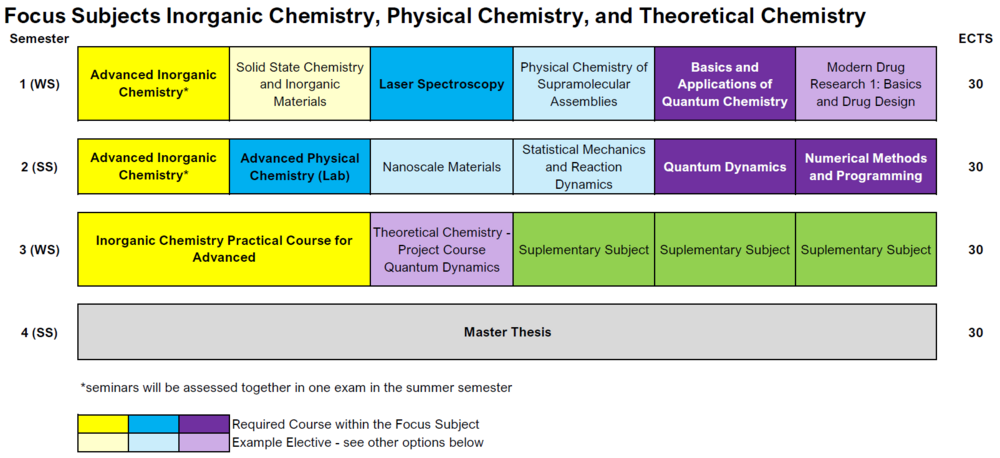
Inorganic, Physical, and Theoretical Chemistry
-
Organic, Physical, and Theoretical Chemistry
-
Spectroscopy & Theory
-
Combining experiments and simulations to uncover reaction mechanisms
-
-
Materials and & Energy Research
-
Simulation and characterisation of new materials, active ingredients, catalysts through computer-aided molecular design
-
-
Industry & Software Development
-
Development of chemistry software or modelling tools
-
The Focus Subject Biochemistry is currently only available with German language skills. In the meantime, please consider our M.Sc. in Biochemistry, which is offered entirely in Englisch.