Team
Group Leader
Dr. habil. Merle Insa Silja Röhr
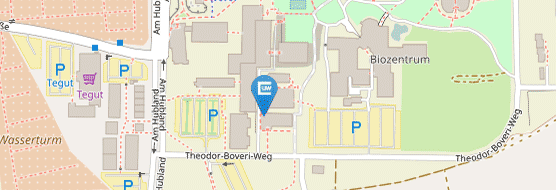
Center for Nanosystems Chemistry (CNC)
Am Hubland

CV
| since 2025 |
Independent Research Group Leader Institute of Physical and Theoretical Chemistry, University of Würzburg |
| 2024–2025 |
Substitute Professor for Theoretical Chemistry University of Würzburg |
| 2020–2025 |
Habilitation in Theoretical Chemistry University of Würzburg |
| 2019–2025 |
Independent Junior Research Group Leader Center for Nanosystems Chemistry, University of Würzburg |
| 2017–2019 |
Postdoctoral Researcher with Prof. Frank Würthner University of Würzburg |
| 2016–2017 |
Postdoctoral Researcher with Prof. Josef Michl University of Colorado Boulder, USA |
| 2012–2016 |
PhD in Theoretical Physics (Dr. rer. nat., summa cum laude) Freie Universität Berlin |
| 2012 |
Diploma in Theoretical Chemistry (grade 1.0) Humboldt-Universität zu Berlin |
| 2011–2013 |
Research stays Université Claude Bernard Lyon 1, France |
| 2005–2011 |
Studies of Chemistry and Physics Humboldt-Universität zu Berlin |
Postdocs
Dr. Bonasree Roy
Hubland Nord
Bonasree studied at the University of Delhi (B.Sc.) and the Malaviya National Institute of Technology Jaipur (M.Sc. Chemistry, thesis on hydrogen atom transfer reactions relevant to ozone-layer recovery), followed by a year there as a Junior Research Fellow. A PhD in theoretical chemistry with Prof. Peter Saalfrank at the University of Potsdam addressed how molecules relax or fragment after absorbing light. Since October 2026, Bonasree has been working in the Röhr group on singlet fission, excited-state charge and energy transfer, and Raman optical activity.
Research topic: Photodynamics of molecules and singlet fission
PhD Students
Johannes Adelsperger
Hubland Nord
Johannes studied chemistry at the Technical University of Munich (B.Sc., 2019–2022) and completed a Master's degree specialising in theoretical chemistry at JMU Würzburg (2022–2024), where research in the Röhr group led to a first-author paper in Physical Chemistry Chemical Physics. Since 2024, Johannes has continued in the group as part of the International Research Training Group IRTG 2991, a German-Indian collaboration on the photoluminescence of supramolecular systems. Interests include quantum chemistry, wave function theory, relativistic effects and computer science.
Research topic: Configuration interaction methods for multiexcitonic photophysics
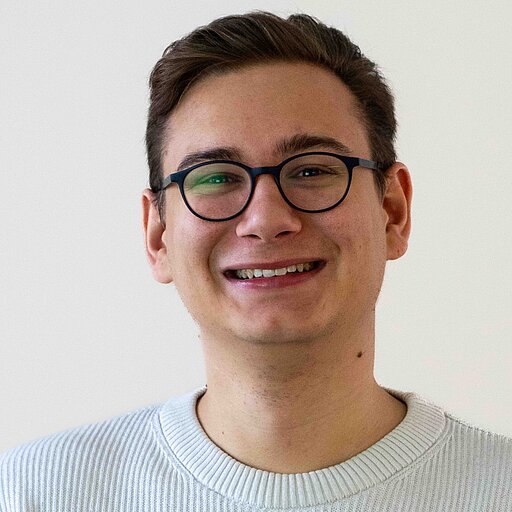
Michael Bühler
Hubland Nord
Research field: Photophysics and Photochemistry

Rishitha Jain
Hubland Nord
Rishitha graduated from IISER Thiruvananthapuram with a BS-MS degree (major in chemistry, minor in physics), with a Master's project on non-covalent interactions in fullerene dimers under Prof. R. S. Swathi. Further projects addressed static electron correlation in ferrocene with a hybrid classical-quantum approach (with Prof. Anil Shaji) and single-atom catalysts for CO2 reduction (with Prof. William Goddard). This work across computational chemistry built a strong foundation in electronic structure theory before Rishitha joined JMU Würzburg.
Research topic: Entanglement and quantum computing
Lasse Kreimendahl
Hubland Nord
Lasse completed an M.Sc. at the University of Würzburg in the group of Prof. Roland Mitrić, focusing on generative machine learning for photoswitch design. The doctoral work is co-supervised by Dr. Merle Röhr and Prof. Roland Mitrić and funded by a fellowship from the Fonds der Chemischen Industrie. Lasse works at the interface of chemical experiment and computer science, in collaboration with several experimental groups across disciplines and countries.
Research topic: Machine learning for the discovery of photoresponsive materials
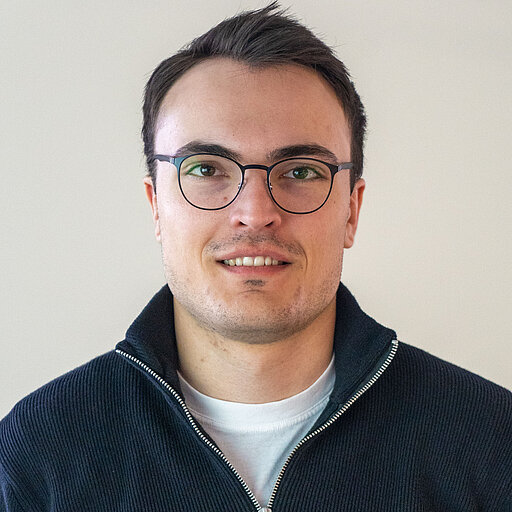
Shobhita Mani
Hubland Nord
Shobhita obtained Bachelor's and Master's degrees from the University of Calicut and is pursuing a PhD at the Indian Institute of Science Education and Research (IISER) Thiruvananthapuram. Shobhita came to JMU Würzburg for a research stay through the exchange programme of the International Research Training Group IRTG 2991. Interests include the computational modelling of molecular interactions with empirical potentials and swarm intelligence-based optimisation, and the influence of aggregation and the surrounding matrix on photophysical properties.
Research topic: Modelling of molecular interactions
Research assistants
Enrico Engelbrecht
Enrico is studying chemistry (B.Sc.) at JMU Würzburg, currently in the fifth semester, and joined the Röhr group as an intern in October 2026. Enrico is developing an optimisation pipeline for monomer-based diabatic energy corrections while exploring the underlying theoretical concepts. Research interests include computational and quantum chemistry, photophysics and light–matter interactions.
Research topic: Monomer-based corrections of diabatic energies
Bastian Hesterberg
Bastian obtained a Bachelor's degree in chemistry with a focus on theoretical chemistry from JMU Würzburg, joined the Röhr group during the undergraduate studies and has been continuing in the Master's programme since October 2026. Driven by an interest in mathematics, physics and chemistry, Bastian is particularly interested in how molecular states can be described and exploited in quantum information theory and future quantum computing technologies, and aims to bridge physics, computer science and chemistry.
Research topic: Spin-correlated triplet-pair states in molecular crystals
Benedikt Schuy
Benedikt started studying chemistry in Würzburg after finishing school. For the Bachelor's thesis in the Röhr group, Benedikt integrated a continuum solvation model for ground and excited states of dye molecules into SymbolicCI, a quantum chemistry program developed in the group. Benedikt stayed in the group for the Master's studies and now uses TENTACLE, the group's newer program for excited states of molecular aggregates, to study supramolecular systems with promising photophysical properties.
Research topic: Quantum chemistry of photoactive supramolecular systems
Lea Schüßler
Lea has been studying Biology and Chemistry Education for secondary schools (Gymnasium) at JMU Würzburg since October 2022. After an admission thesis (Zulassungsarbeit) in Chemistry Education, Lea completed an internship in theoretical chemistry in the Röhr group. Supported by Lasse Kreimendahl, Lea has developed the group's inclusive AI-based chemistry chatbot, within the KI-Tutorien Bayern programme and with the Department of Chemistry Education. Lea is interested in how AI and machine learning can make science education more accessible and inclusive.
Research topic: AI-based chatbots for inclusive chemistry education
Marc Wyschka
Marc attended the Humboldt-Gymnasium Schweinfurt (Abitur 2024) and has been studying chemistry (B.Sc.) at JMU Würzburg since the winter semester 2024/25. In June 2026, Marc joined the Röhr group as an intern and student research assistant. Marc is interested in theoretical and computational chemistry and the physical foundations of chemical processes, motivated by the potential efficiency gains of simulations compared with experimental laboratory work.
Research topic: Light-harvesting nanotubes